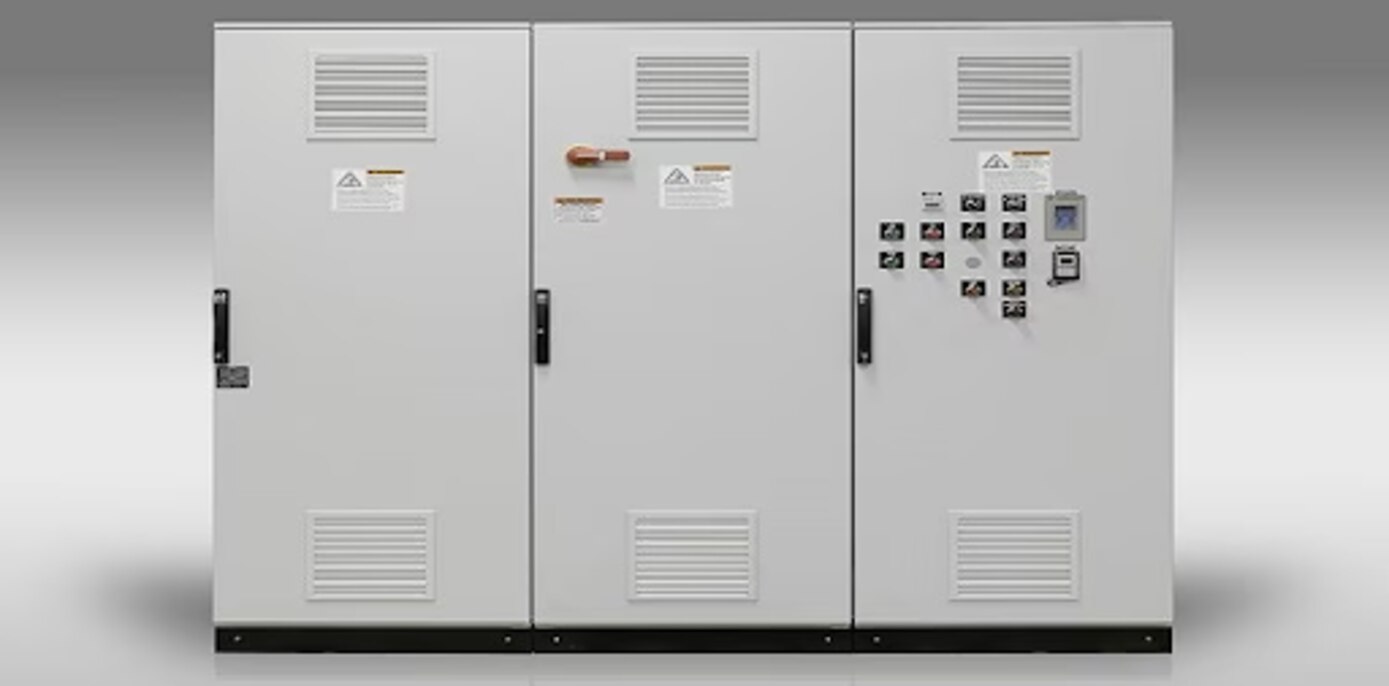
Unexpected electrical downtime usually begins with a condition that was visible, measurable, or recorded before the panel stopped production: a hot termination, degraded insulation, blocked cooling path, repeated nuisance trip, or untested backup. By the end, you will be able to identify what a useful AMC covers, judge the evidence in its service reports, and compare quotations by their ability to prevent and shorten outages.
Key takeaways
- Schedule inspections, tests, corrective actions and escalation points throughout the year.
- Investigate hot terminals, discolouration, nuisance trips and unexplained motor faults promptly.
- Request test readings, thermal images, defect lists and signed service reports.
- Compare AMC quotes by scope, response time, exclusions, spares and safety responsibilities.
What a Control Panel AMC Covers Across the Year
An effective control panel AMC scope is a documented electrical maintenance program, not one annual cleaning visit. The annual maintenance schedule assigns inspections, tests, records, corrective actions, and escalation points to each panel.
1. Monthly: Perform MCC panel maintenance and checks on MCC, PCC, APFC, PLC, and VFD panels. Record abnormal noise, smell, heat, nuisance trips, fan operation, blocked filters, capacitor swelling, contactor condition, and alarm history.
2. Quarterly: Follow the PCC panel maintenance schedule with preventive cleaning under an approved isolation procedure. Inspect busbars, cable entries, terminals, and cooling components, then review motor and drive fault histories. Cleaning without isolation creates avoidable shock and arc-flash risk.
3. Half-yearly: Verify termination torque, insulation resistance, and earth continuity. Test breakers and relays, measure capacitor current, and complete VFD diagnostics and functional verification. An infrared scan finds heat under load; it does not prove correct terminal torque.
4. Yearly: Review protection settings, condition trends, and obsolescence. Where permitted, back up PLC programs, HMI data, drive parameters, networks, and safety-controller data; perform restoration or comparison testing. Maintain a lifecycle list for obsolete CPUs, HMIs, drives, power supplies, and communication modules.
Set these intervals from panel condition, operating environment, loading, use, manufacturer instructions, and recorded defects. That condition-based approach aligns with NFPA 70B’s 2023 edition; a dusty, heavily loaded VFD panel needs different attention from a lightly used, clean enclosure.
Which Warning Signs Reveal an Impending Panel Failure
The clearest warning signs reveal an impending panel failure through heat, damage, and changing operation before production stops.
During control panel inspection points, look for a loose busbar joint, an overheated cable lug, discoloured terminals, pitted contactors, cracked insulation, swollen or leaking capacitors, failed enclosure fans, blocked filters, dust around heat-producing components, and unusual enclosure temperature.
A high-resistance connection creates heat before it creates an open circuit. Declining insulation-resistance readings in megohms expose deterioration before a fault, while failed cooling increases stress on PLC power supplies, VFD electronics, contactors, and DC-bus capacitors. Cooling is reliability work, not cosmetic cleaning.
When a breaker, overload, or drive trips, preserve the evidence instead of simply resetting it. Record:
- The fault code, breaker or overload event, motor current, and phase condition
- The process state, recent changes, and reset history
- Protection settings and evidence of voltage sags, phase imbalance, harmonics, transients, or motor-start events
- VFD temperature, overtemperature history, fan and filter condition, DC-link capacitors, braking components, and repeated VFD faults
| Observed sign | Likely evidence | Required response |
|---|---|---|
| Repeated nuisance trips | Incorrect settings, imbalance, sag, or overload | Investigate the initiating event |
| Abnormal VFD temperature | Failed fan, blocked filter, or capacitor stress | Check cooling and fault history |
| Standing alarms | Hidden electrical or process fault | Review and rationalise alarms |
Use a power-quality recorder for event data; visual inspection cannot identify every upstream sag or transient. Alarm review matters because nuisance alarms can hide a genuine fault.
Which Tests and Records Prove That Maintenance Was Done
A maintenance visit is proven by dated measurements, not a tick beside “cleaned.” Under an approved de-energized procedure, request an insulation resistance test megohms reading for each selected circuit, a low-resistance ohmmeter or continuity tester reading from an earth continuity test, calibrated torque-wrench values for terminations, and multimeter results for control voltage and signals.
| Test or record | Evidence to request | What it proves |
|---|---|---|
| Breaker injection test | Breaker trip test results showing pickup and trip time against specified settings | Protection operates as intended |
| Relay verification | Protection functions, settings, and test results | Relay logic matches approved values |
| Clamp-meter check | Capacitor current, feeder current, and phase readings | Loading and phase balance are visible |
| Thermographic inspection | Thermographic inspection report naming the component, load current, ambient conditions, emissivity assumption, measured temperature, phase comparison, temperature difference, image, and action | Abnormal heat is assessed under representative load |
Use a thermal camera while the panel carries a representative load. A thermal image cannot prove that a termination has the manufacturer’s specified torque, and a lightly loaded panel can hide a high-resistance joint.
For PLC and HMI systems, request the application program, hardware configuration, firmware or compatibility information, network settings, drive parameters, permitted safety-controller data, password or access ownership, and a tested restore or comparison record. An unreadable or untested backup is not a recovery plan.
The completed report should include:
- Dated readings, photographs, test-instrument identification, and calibration status
- Defects, priority, corrective recommendation, and close-out evidence
How Maintenance Planning Shortens an Outage When Something Still Fails
Planned access both prevents failures and shortens recovery when one occurs. Preventive versus corrective maintenance means finding deterioration during an AMC visit, then repairing a known defect before or after it causes failure. Breakdown maintenance support begins only after production stops and provides no scheduled condition trend.
A warranty visit covers a product defect within warranty terms. It does not automatically cover cleaning, ageing components, site-wiring faults, production losses, or emergency response.
1. Define safe access before the visit: lockout/tagout, permits, arc-flash boundaries, approved test instruments, isolation responsibility, and a production maintenance window. Without that window, technicians may only inspect an energized panel instead of completing de-energized tests.
2. Preserve current drawings, terminal schedules, I/O lists, cable labels, panel photographs, alarm-rationalization records, and controlled change history. Add PLC backup and recovery evidence, including hardware configuration, firmware compatibility, drive parameters, network settings, access ownership, and a tested restore or comparison record.
3. Record UPS battery maintenance data: battery age, temperature, impedance or conductance trend, autonomy-test result, and replacement date. A powered UPS can still lack the battery capacity needed for ride-through.
4. Track drive fans, filters, DC-link capacitors, braking components, and power modules against manufacturer guidance, fault history, thermal readings, and electrical measurements. Replacing every drive on an arbitrary annual cycle wastes service life and budget.
These records reduce mean time to repair because a technician can identify the failed circuit or reload a compatible controller without reconstructing the system during the outage. A controlled spare and obsolescence list further prevents a failed PLC, drive, or power supply from becoming a long lead-time stoppage.
How to Compare AMC Quotations Before You Sign
Compare AMC quotations by the downtime they control, not by the annual fee alone. Ask every provider to state planned monthly, quarterly, half-yearly, and yearly visits, response time for each fault priority, outside-business-hours technician availability, emergency-call limits, escalation contacts, and the procedure for repeated or unresolved failures.
| Service term | Provider’s stated commitment | Decision test |
|---|---|---|
| Visits | Monthly, quarterly, half-yearly, yearly numbers | Does access match your operating risk? |
| Response | Priority-based response times and after-hours cover | Can a stopped line receive help? |
| Recovery | Escalation and repeated-failure procedure | Who owns unresolved faults? |
| Commercials | Renewal price, notice period, credits, change control | Can cost change without approval? |
Compare the testing scope line by line. Require these items to appear in the quotation: insulation resistance, earth continuity, torque verification, thermography under representative load, breaker-trip testing, relay verification, capacitor-current measurement, VFD diagnostics, PLC backup and restore comparison, alarm review, and power-quality recording when an event warrants it.
Request a sample report with readings, thermal images, load and ambient data, fault history, defect priorities, recommendations, and closure status. Reject a thermal photograph without component identity, current, ambient temperature, and measured temperature difference.
Write AMC exclusions clearly. Replacement breakers, contactors, fuses, capacitors, VFDs, PLC modules, cables, batteries, major rewiring, panel modifications, and production losses remain chargeable unless stated otherwise. Check critical-spares stocking, obsolescence reviews, and tested replacements for parts whose lead time exceeds your outage tolerance.
For a site assessing Maxwell Tech Solutions Pvt Ltd or another industrial electrical maintenance contract provider, judge the method, records, response structure, and exclusions—not the company name or lowest fee.
Frequently asked questions
What does a control panel AMC cover across the year?
It covers scheduled inspections, electrical tests, cleaning, tightening, corrective actions, documentation and escalation points for each panel.
Which warning signs reveal an impending control panel failure?
Hot terminals, insulation discolouration, unusual noise, burning smells, nuisance trips, loose wiring and unexplained motor faults indicate problems requiring investigation.
Which records prove that control panel maintenance was completed?
Request signed service reports containing inspection findings, test readings, thermal images, defect status, corrective actions, dates and technician details.
How should you compare control panel AMC quotations?
Compare the included maintenance tasks, visit frequency, emergency response time, exclusions, spare-parts terms, safety responsibilities and reporting requirements.