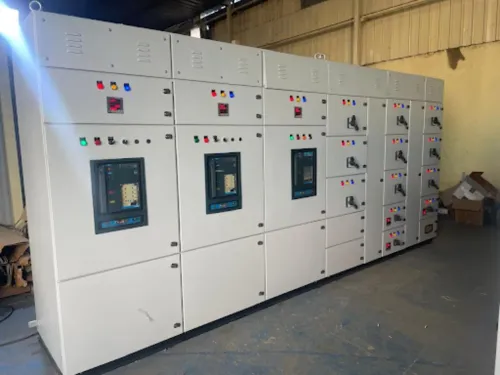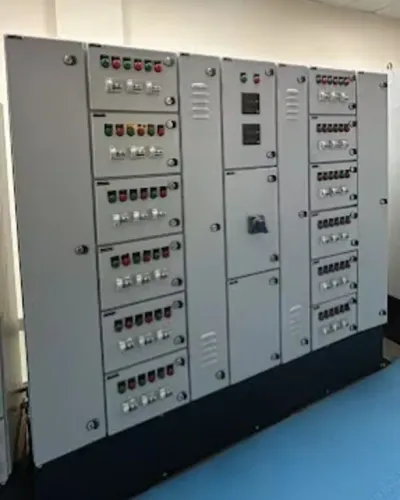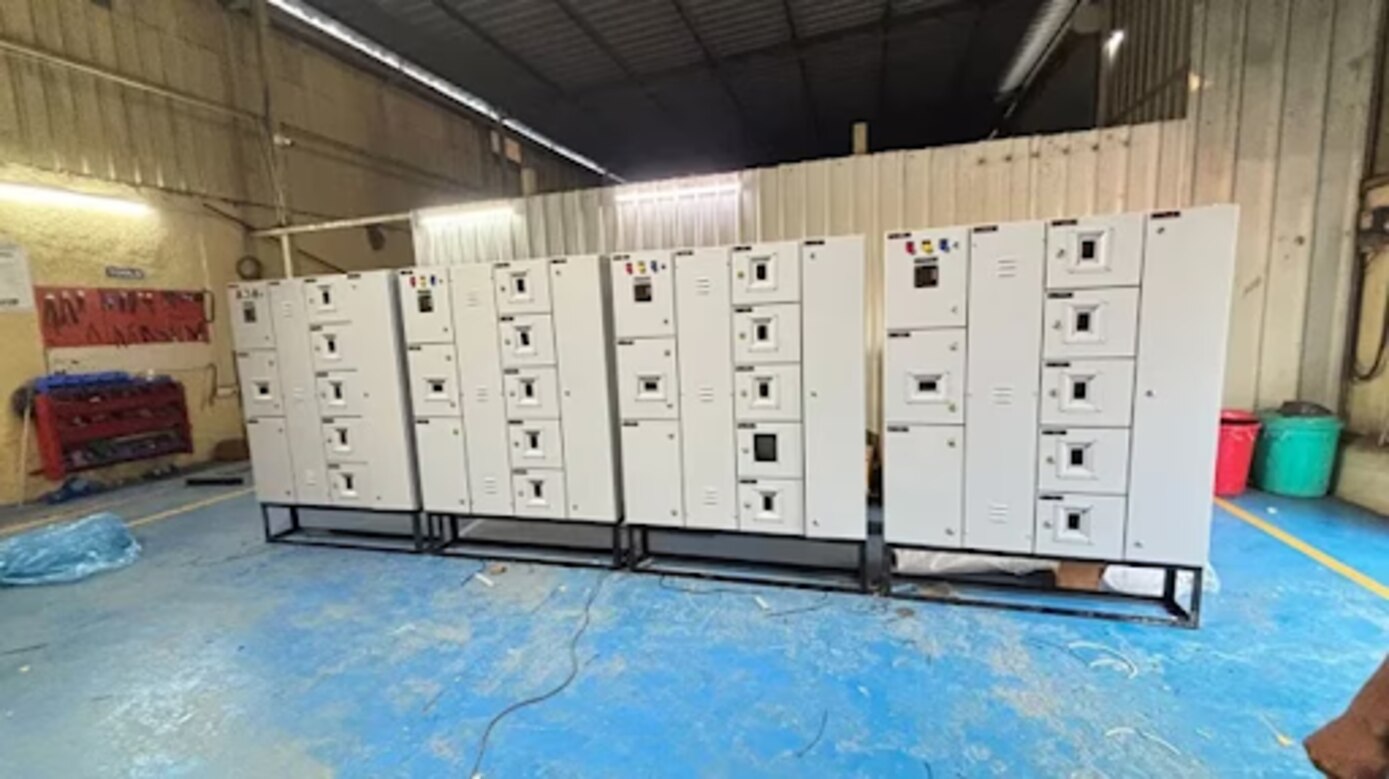
Repeated trips, obsolete controls, manual changeovers and expanding loads do not all require the same remedy. You will be able to identify the type of upgrade, decide whether the existing panel is worth modifying, and compare suppliers using evidence that exposes engineering and commissioning gaps.
Key takeaways
- Escalate recurring motor, power, logic or safety faults into a panel-level review.
- Document loads, sequences, I/O, safety functions and site conditions before requesting quotations.
- Reuse a panel only after checking capacity, condition, compatibility and compliance.
- Demand drawings, PLC backups, test records and commissioning plans before approving the upgrade.
Which operating problems justify bringing in an automation control panel supplier?
Bring in an automation control panel supplier when the remedy changes how power, motors, control logic, safety or production commissioning work together. That is a panel-level process upgrade, not a routine repair.
| Problem signal | Narrower task or panel-level need | Decision trigger |
|---|---|---|
| Repeated motor trips and downtime | Electrician for a failed contactor; supplier for starting, protection or distribution changes | Trips continue after component replacement |
| Unavailable PLC replacement parts | OEM service team for a supported equivalent; supplier for migration | CPU, I/O, communications, recipes or alarms need revalidation |
| Manual changeovers or poor batch repeatability | Controls integrator for isolated logic; supplier for sequence, HMI and field-wiring changes | Production control must be redesigned |
| Unstable power factor or inadequate alarms | Component replacement for a failed capacitor; supplier for APFC, protection or alarm architecture | Correction affects distribution or operating decisions |
| Unsafe panel access or expansion beyond capacity | Electrician for a door latch; supplier for enclosure, busbar, I/O or safety redesign | Existing hardware cannot support the change |
Use the dividing test: appoint a supplier if the work affects power distribution, motor starting, PLC sequence logic, safety circuits, field wiring, communications or production commissioning. A mixer that cannot start under load, a PLC with no supported CPU, or a new line exceeding busbar and I/O capacity justifies an industrial control panel upgrade.
Repeated component swaps and temporary bypasses only hide the fault, create undocumented states and increase risk. A damaged HMI, isolated sensor or failed contactor does not automatically justify a new panel.
How should you define the upgrade before asking for a quotation?
Start by naming the failure you want corrected, then assign it to one work package: PLC migration scope and sequence control, MCC motor starting, VFD retrofit, PCC and APFC upgrade, or field wiring and instrumentation. Mixing these categories produces vague quotations and unpriced exclusions.
1. Send the supplier a brief with the single-line diagram, load schedule, motor list, motor ratings, starting methods, PLC and HMI part numbers, I/O list, control narrative, process sequence and fault history.
2. Add the electrical boundary conditions: short-circuit level, incoming voltage, enclosure location, ambient conditions, cable-entry direction and site standards. Include existing protection settings and utility power-quality records.
3. For a mixer, provide impeller geometry, viscosity, solids loading, vessel level and start-under-load requirements. These determine breakaway torque and acceleration; motor kW alone does not.
4. Request utility and site power-quality data before accepting harmonic filters. Assess IEEE 519 at the point of common coupling, where short-circuit strength, transformer impedance and other loads affect distortion; do not impose one fixed percentage on every drive.
5. State whether the area uses Class/Division or Zone hazardous-area classification. Record washdown chemicals, pressure-washing practice and hygienic requirements, because enclosure materials and ignition-control methods depend on exposure.
Ask the quotation to show which package changes, what remains untouched and what tests prove each change. That boundary prevents an APFC correction from being priced as a PLC job or a VFD retrofit from hiding motor-side cable and torque risks.
When can an existing control panel be modified instead of replaced?
Modify an existing panel only when its physical capacity, electrical ratings and documentation can support the proposed process change. Otherwise, control panel modification or replacement should be decided by the weakest limit, not by the age of the enclosure alone.
- Inspect spare DIN-rail space, available I/O, busbar rating, heat dissipation, enclosure condition, segregation, wiring identification and obsolete components. A crowded rail, unidentified conductors or unsupported PLC hardware can turn a small addition into an unreliable repair.
- Calculate the proposed fault current against the required panel SCCR using UL 508A Supplement SB and the marked ratings of downstream components. Replacing the main disconnect does not automatically increase SCCR; one contactor, breaker or power supply can remain the limiting component.
- Review protection coordination and clearing times after changes to transformer capacity, protective settings, motor horsepower, VFDs, bus configuration or fault paths. Update the arc-flash assessment using IEEE 1584 because these changes can alter incident energy and approach boundaries.
- Treat VFD motor protection as a motor-side design task. Check cable length, insulation stress, bearing currents, grounding and EMI, then select an output reactor, dv/dt filter or sine-wave filter where the application requires it.
- For machinery safeguards, complete a risk assessment and design a validated safety function under ISO 13849-1 or IEC 62061. A standard PLC routine is not a substitute for safety validation.
Replace the panel when its enclosure, thermal margin, segregation, fault rating, wiring condition or expansion space cannot support the change.
What separates a panel fabricator from a supplier capable of executing the upgrade?
A panel can be neatly wired and still fail the upgrade. Compare a panel fabricator versus automation supplier by asking who will own the live process change.
| Capability | Panel fabricator | Automation supplier |
|---|---|---|
| Control change | Builds to supplied drawings | Changes logic, preserves retentive data, alarms, recipes and permissives during PLC migration |
| Integration | Terminates panel components | Integrates instruments, parameterises drives, completes field wiring and validates safety circuits |
| Commissioning | Tests enclosure and wiring | Configures the industrial Ethernet network design and commissions the live process |
Require the proposal to identify:
- Engineering scope, general arrangement drawings, power and control schematics, bill of materials, PLC and VFD brands, enclosure construction, IP rating or NEMA rating, protection devices and communication protocols.
- Terminal plans, I/O allocation, cable schedules and heat-load calculations, plus responsibility for installation, testing and production cutover.
- Industrial Ethernet topology, managed switches, segmentation, VLANs, time synchronisation, recovery behaviour and remote-access controls.
For washdown service, distinguish NEMA Type 4X and IP rating: NEMA Type 4X addresses hose-directed water and corrosion, while an IP code is a separate IEC classification. Match stainless grade, seals and coatings to chemicals, pressure washing and temperature cycles.
For a hazardous-area control panel, confirm Class/Division or Zone classification, listed equipment and the ignition-control method: explosionproof construction, intrinsic safety, purging or pressurisation. A larger enclosure is not a hazardous-area solution. Maxwell Tech Solutions Pvt Ltd belongs on the shortlist only when its proposal demonstrates this full-upgrade ownership.
Related products
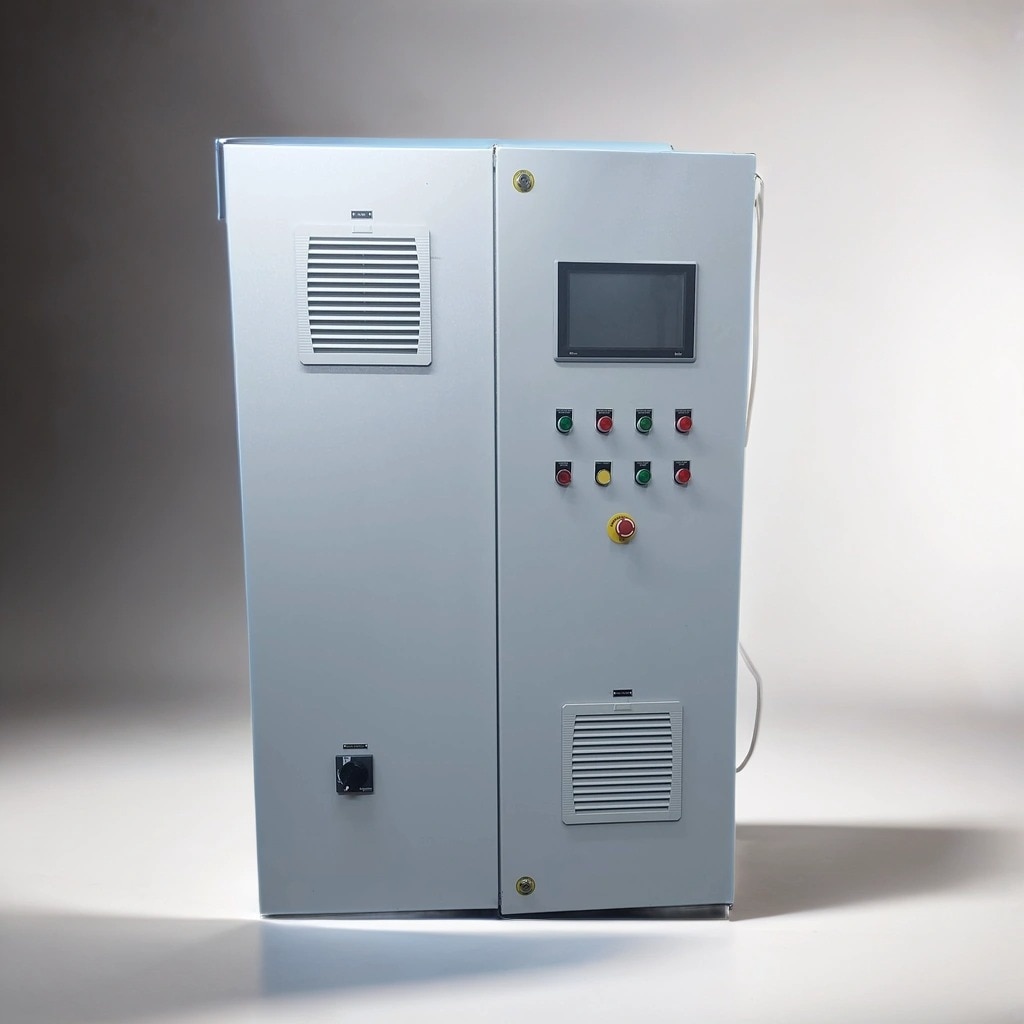 | Electrical Control Panel Manufacturer in India, Pune, Pimpri Chinchwad | Maxwell Tech Solutions Pvt. Ltd. Maxwell Tech Solutions Pvt. View product → |
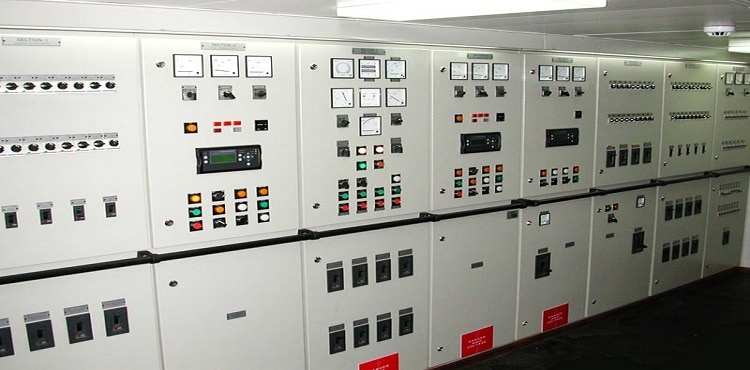 | Electrical Control Panel Manufacturer in India, Pune, Pimpri Chinchwad | Maxwell Tech Solutions Pvt. Ltd. Maxwell Tech Solutions Pvt. View product → |
Which deliverables prove that the proposed upgrade will work at the plant?
The proof is a signed design package plus separate FAT and SAT for control panels. Before purchase, require approved GA drawings, power and control schematics, terminal plans, I/O allocation, cable schedules, heat-load calculations, protection coordination and SCCR documentation using UL 508A Supplement SB where applicable.
Add a cause-and-effect matrix for every defined trip, permissive and shutdown.
For networked controls, reject a nominal data-rate claim as the main assurance. Specify managed switches, network segmentation, VLANs, time synchronisation, recovery behavior after link or switch failure, and remote-access controls.
FAT and SAT must test different risks:
| Test | Proves | Typical checks |
|---|---|---|
| FAT | The panel design and build work before shipment | Simulated I/O, wiring, sequences, alarms, HMI screens, interlocks and network configuration |
| SAT | The installed system works at the plant | Field termination, instrument scaling, motor rotation, actual permissives, safety-device operation and live-process timing |
A panel can pass FAT and still fail SAT because a field wire is landed incorrectly or a process delay was never tested. Put the boundary in the quotation: who installs and terminates cables, provides commissioning support, supplies training, produces as-built control panel documentation and test records, and corrects defects under the warranty.
Define whether software changes, field instruments and production delays remain inside or outside that warranty.
Frequently asked questions
Which operating problems justify bringing in an automation control panel supplier?
Use a supplier when the remedy affects power distribution, motor control, PLC logic, safety circuits, production sequencing or commissioning. Repeated trips, obsolete components, uncontrolled manual intervention and unreliable interlocks are common triggers.
How should you define an automation panel upgrade before requesting a quotation?
Record the process sequence, motor list, connected loads, voltage, fault levels, I/O schedule, safety functions, enclosure location, environmental conditions and required production downtime. Include existing drawings, photographs and fault history.
When can an existing control panel be modified instead of replaced?
Modification is practical when the enclosure, busbars, protection devices, wiring space, heat dissipation and short-circuit rating support the new equipment. Replace the panel when it is damaged, overcrowded, obsolete or incompatible with the required safety and control architecture.
What deliverables show that a proposed panel upgrade will work at the plant?
Request a single-line diagram, control schematic, panel layout, I/O list, load calculations, bill of materials, PLC and HMI documentation, FAT records, cable schedule, risk assessment, commissioning procedure and backup files.
Related products
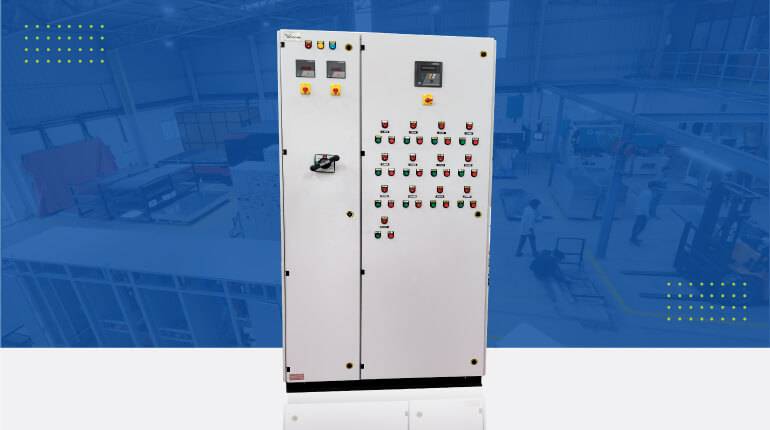 | Electric Panel Automatic Power Factor Correction Apfc Panel ₹120000 APFC Control Panel Manufacturer in Pune | Talawade Power Factor Panel Experts Looking for a trusted APFC Control Panel manufacturer in Pune and... View product → |
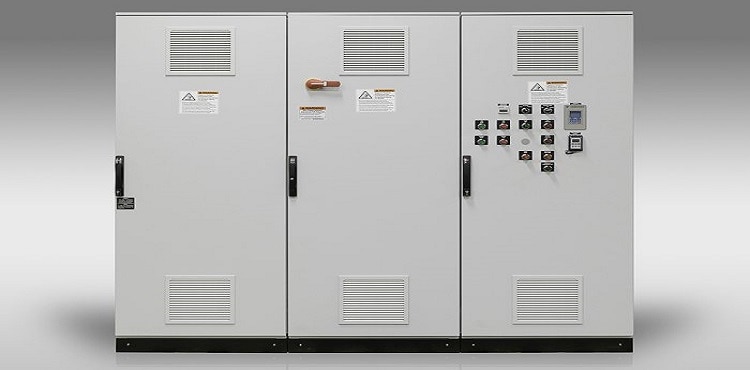 | Electrical Control Panel Manufacturer in India, Pune, Pimpri Chinchwad | Maxwell Tech Solutions Pvt. Ltd. Maxwell Tech Solutions Pvt. View product → |
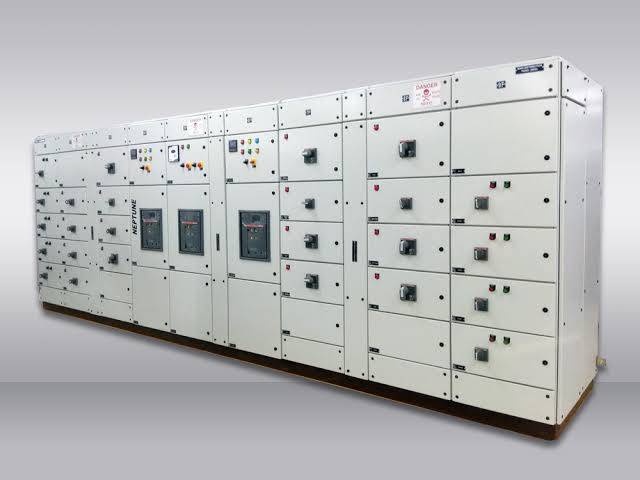 | Electrical Control Panel Manufacturer in India, Pune, Pimpri Chinchwad | Maxwell Tech Solutions Pvt. Ltd. Maxwell Tech Solutions Pvt. Ltd. View product → |