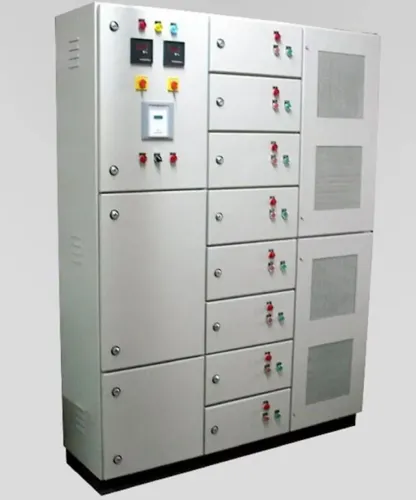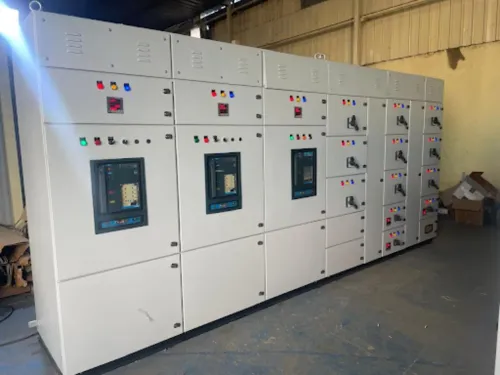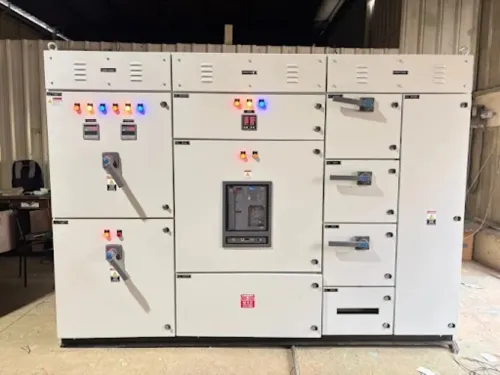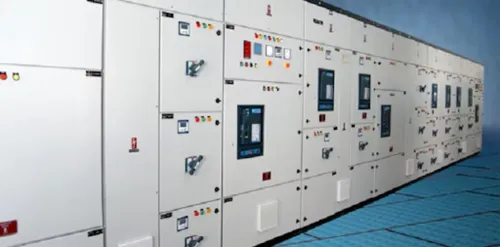
A panel board manufacturer must fit the plant’s process, electrical load, environment and maintenance model—not simply offer a catalogue enclosure or familiar component brands. By comparing industry-specific risks, assembly-level test evidence, engineering documents and lifecycle support, you can reject unsuitable bids before they become commissioning problems.
Key takeaways
- Match the panel design to motor loads, fault levels and process-specific shutdown risks.
- Specify enclosure rating, ambient conditions, cable entry and maintenance access before requesting quotes.
- Request short-circuit calculations, routine test records, wiring drawings and component traceability.
- Make FAT cover protection settings, interlocks, alarms, labels and every agreed operating sequence.
Does the manufacturer understand your industry’s load and process risks?
Use an industry-by-industry checklist before comparing prices; a low quote is worthless if the panel cannot survive your process or protect it.
1. For pharmaceutical panel boards, verify cleanability, stainless-steel construction where required, controlled documentation, recipe integrity and safety interlocks.
2. For food and beverage control panels, check washdown exposure, hygienic access, condensation control and corrosion resistance. Poor enclosure choices turn cleaning into a failure point.
3. For chemical industry electrical panels, demand evidence for corrosive atmospheres, hazardous-area boundaries, chemical compatibility and emergency-shutdown interfaces.
4. For automotive plant panels, examine high motor counts, robotic and welding loads, fast cycle times, networked controls and planned production-line changes.
5. Textile plants need continuous-duty operation, dust protection, static control, numerous smaller motors and enough ventilation to prevent heat buildup.
6. Water-treatment buyers should verify outdoor exposure, pump duty cycles, wet-well level signals, remote communications and standby operation.
7. Cement plants should check abrasive-dust protection, high starting torque, large motors, long cable runs and high fault levels. A general-purpose enclosure can fail quickly in this environment.
8. General manufacturers must match the supplier’s experience to motor count, motor ratings, starting current, duty cycle, harmonics, fault level and planned expansion. Include VFD cable length, braking and motor compatibility when drives are involved.
Ask for comparable project references and design examples, not a broad industry list. Review a sample load schedule, single-line diagram and control philosophy to see whether the manufacturer understands both electrical demand and process consequences. For mixing equipment, also check stall detection, dry-run protection, access interlocks and power-failure batch recovery.
Which panel type and site conditions should the specification cover?
Choose the panel architecture before comparing manufacturers: PLC panel selection, PCC panel specification, MCC panel manufacturer, APFC panel, VFD enclosure design, or a coordinated combination.
| Panel type | Check before appointment | Capability required |
|---|---|---|
| PLC panel | Sequencing, analog signals, communications, safety validation | Controls and application engineering |
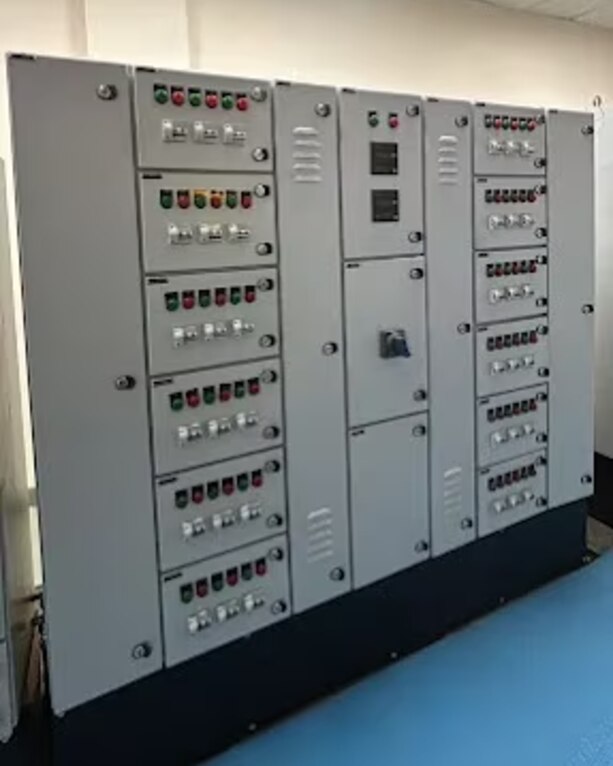
| PCC or MCC | Fault level, busbar withstand, protection coordination | Power distribution and motor control |
| APFC panel | Harmonics, capacitor switching, detuning reactors | Power-quality design |
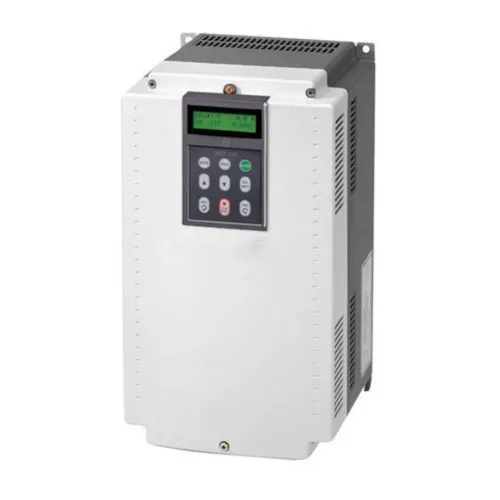
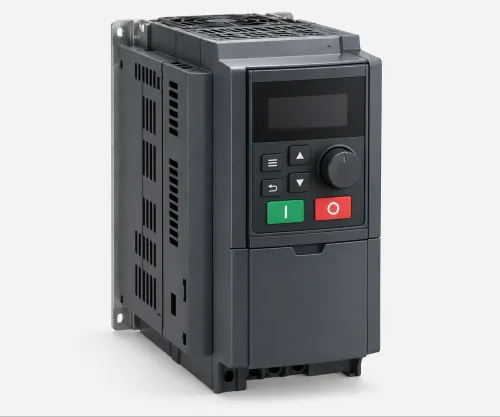
| VFD enclosure | Drive protection, cooling, EMC and motor compatibility | Drives and thermal engineering |
Do not assume one supplier is competent across all five disciplines. A PLC specialist may be unsuitable for high-fault-level distribution, while a power-panel builder may not understand sequencing, analog signals or safety validation.
Require the design basis to state site voltage, frequency, phase arrangement, prospective short-circuit current, short-circuit withstand rating, ambient temperature, altitude, humidity, dust, oil, washdown and corrosive exposure. Specify IEC 60529 IP or the applicable NEMA enclosure type by exposure; “NEMA/IP equivalent” is not a specification because the systems are not interchangeable.
For VFD enclosure design, verify input protection, bypass or line-start arrangements, motor-cable length, dv/dt or sine-wave filtering, grounding, EMC, braking energy and inverter-duty motor compatibility. A kW match alone proves little.
Require heat-dissipation calculations at simultaneous loading for drives, soft starters, transformers, power supplies, reactors, contactors and harmonic filters. The submission must state ambient assumptions, altitude, cooling-maintenance intervals and filter replacement access; otherwise overheating can cause nuisance trips and shortened component life.
What standards, calculations and test records prove the assembly is fit?
Before ordering, require assembly-level evidence, not a folder of component brochures. A compliant breaker or enclosure does not prove that the completed panel will survive its actual load, fault level or installation conditions.
1. Request the single-line diagram, load schedule, bill of materials, GA drawing, control schematic, cable schedule, heat-dissipation calculation, short-circuit calculation, protection-coordination study and panel test reports. Check that the drawings identify ratings, terminals, protective devices, cable sizes and spare capacity.
2. Confirm the product standard and certification scope. For IEC work, require IEC 61439 for low-voltage switchgear and controlgear assemblies and IEC 60947 components for low-voltage devices. Ask for applicable IEC 61439 design-verification evidence and routine-verification records for the completed assembly; IEC 61439 panel testing and component datasheets alone do not prove panel compliance.
3. For North American installations, require the manufacturer to state whether UL 508A industrial control panel or the UL 67 panelboard standard governs the product, including permitted field-installation conditions. Obtain the completed panel’s SCCR marking, calculation method, assumed available fault current and any required upstream current-limiting device.
4. Do not equate SCCR with the main breaker’s interrupting rating. The weakest power-circuit component or an unverified combination can control the result, even when the main breaker carries a higher rating.
5. Record the code basis, including NFPA 79 and NEC Articles 409, 430, 440 or 670 where relevant. Assign responsibility for field wiring, disconnects, overcurrent protection and approval by the authority having jurisdiction.
How can you inspect engineering quality, safety and component traceability?
1. Inspect the production process, not only the finished enclosure. During panel manufacturing inspection, verify busbar sizing and supports, segregation, wiring-duct fill, ferrules, terminal labels, earthing continuity, door bonding, gland plates, ventilation and maintenance access. A crowded duct or loose door bond becomes a fault during service.
2. Require panel component traceability in the controlled bill of materials: manufacturer and model numbers for breakers, contactors, relays, PLC hardware, VFDs, busbars, meters and protection devices.
Include replacement availability after commissioning, approved alternates and customer approval before substitution; equal voltage and current ratings do not prove equal SCCR, heat generation, EMC behaviour, software compatibility or safety approval.
3. For a safety-rated control panel, separate ordinary interlocks from safety functions. Request the risk assessment, safety-circuit architecture, calculated performance level or safety integrity level, validation report and reset/restart behaviour for emergency stops, guard doors, overspeed, high-level, torque-limit and mixer-access functions.
4. For an industrial mixer control panel, verify starting torque, stall detection, agitator permissives, dry-run protection, seal or bearing monitoring, load-cell handling, washdown suitability and power-failure batch recovery. A generic motor panel can run the motor yet fail to protect the mixer or preserve the process.
5. Use this evidence when assessing suppliers such as Maxwell Tech Solutions Pvt Ltd: it separates application engineering from enclosure assembly and exposes gaps before commissioning. Ask for every document before approving the design.
Related products
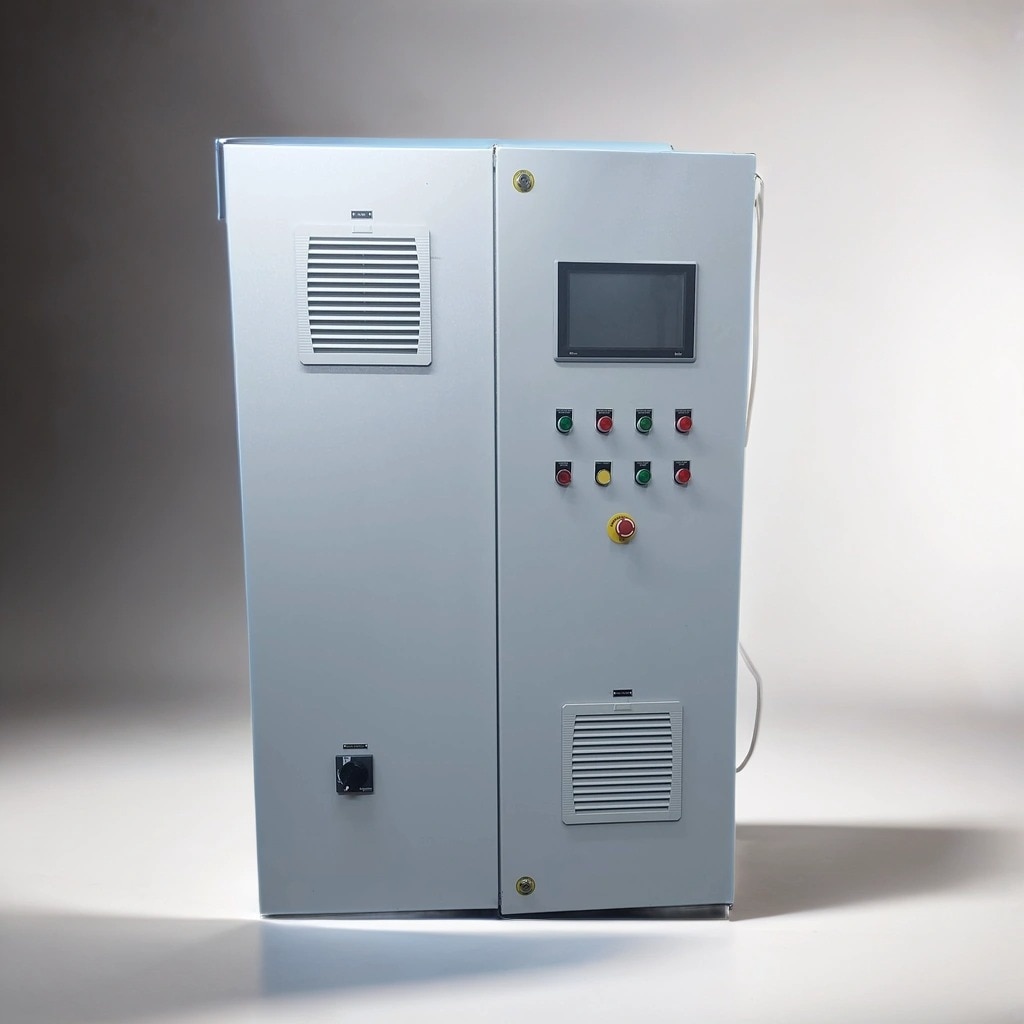 | Electrical Control Panel Manufacturer in India, Pune, Pimpri Chinchwad | Maxwell Tech Solutions Pvt. Ltd. Maxwell Tech Solutions Pvt. View product → |
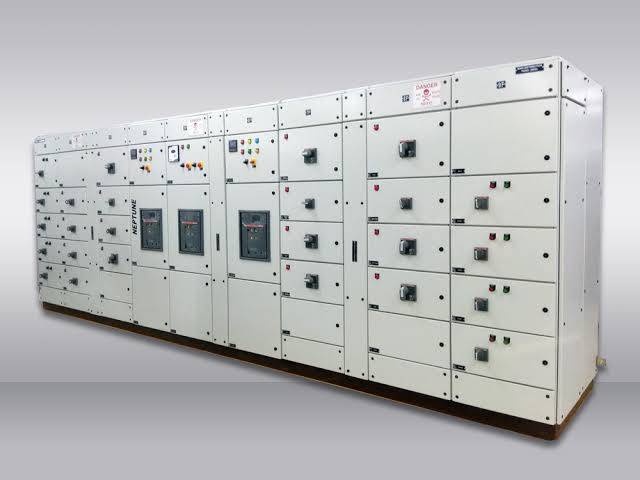 | Electrical Control Panel Manufacturer in India, Pune, Pimpri Chinchwad | Maxwell Tech Solutions Pvt. Ltd. Maxwell Tech Solutions Pvt. Ltd. View product → |
What must the FAT, handover pack and service model include?
Set the panel FAT procedure before fabrication is complete, naming the customer-witnessed tests, pass criteria, test instruments and evidence required. Do not accept a visual inspection as functional proof.
1. For automation or mixing systems, test every I/O point, alarm, permissive, safety-device response, motor rotation, interlock, power-loss and power-restoration response, network communication, analog scaling and recipe or batch sequence. Test backup and restore for PLC, HMI, drive and safety-controller programs.
2. Specify IEC 62443 automation cybersecurity requirements for networked panels: unique credentials, deleted default accounts, role-based access, secure remote service, backup and recovery, patch and vulnerability handling, time synchronisation, event logging, and a documented boundary between the control network and corporate or cloud networks.
3. Make industrial control panel documentation contractual. Require as-built schematics, terminal plans, wire and device schedules, enclosure drawings, heat-load data, protection settings, certificates, FAT records, source files, passwords transferred through an agreed handover process, and recommended spares.
4. Confirm who supplies arc-flash panel data and field labels. The site study needs available fault current, protective-device settings, conductor lengths, enclosure configuration and clearing time; a catalogue label cannot determine incident energy.
Require SCCR, feeder and branch ratings, protective-device types and withstand data to support that study, plus the completed panel’s SCCR calculation and assumed fault current.
Agree service response times, remote-access approval, backup ownership and escalation contacts before commissioning. Without those terms, a failed drive or lost program can turn a minor fault into prolonged production downtime.
Frequently asked questions
What should industries assess before choosing a panel board manufacturer?
Assess whether the manufacturer understands your motor loads, starting currents, fault levels, process interlocks and shutdown risks. Ask for comparable project evidence and a design review based on your load list and sequence of operation.
Which site conditions belong in a panel board specification?
State the panel type, rated voltage and current, short-circuit withstand, IP rating, ambient temperature, humidity, altitude, corrosion exposure, indoor or outdoor location, cable-entry direction and available maintenance space.
Which standards and records prove an assembly is fit for service?
Request the applicable IEC 61439 assembly documentation, design-verification evidence, routine-verification test records, short-circuit rating, heat-rise assessment, protection-coordination study and approved single-line and wiring diagrams.
How can you check engineering quality and component traceability?
Inspect segregation, busbar supports, earthing, shrouding, ferrules, wire markers, gland plates, clearances and terminal identification. Match component make, model, rating and batch or serial details against the bill of materials and certificates.
What should the FAT and handover pack include?
Agree FAT procedures before manufacture. Test wiring continuity, insulation resistance, dielectric strength where specified, protection settings, interlocks, alarms, metering, communication and simulated operating sequences. Collect as-built drawings, manuals, test sheets, settings, certificates, spare-parts lists and warranty contacts.
Related products
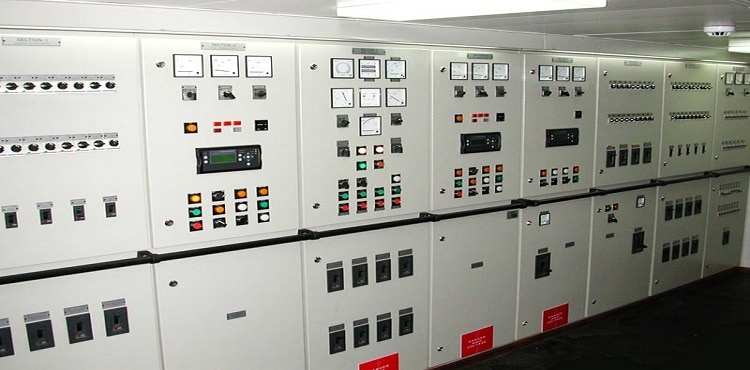 | Electrical Control Panel Manufacturer in India, Pune, Pimpri Chinchwad | Maxwell Tech Solutions Pvt. Ltd. Maxwell Tech Solutions Pvt. View product → |
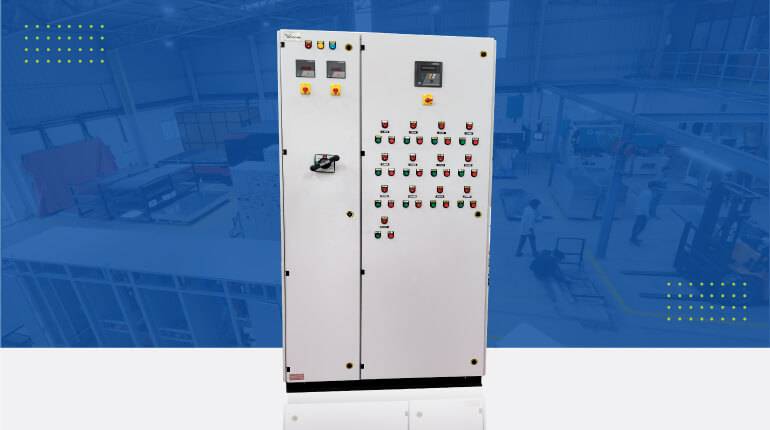 | Electric Panel Automatic Power Factor Correction Apfc Panel ₹120000 APFC Control Panel Manufacturer in Pune | Talawade Power Factor Panel Experts Looking for a trusted APFC Control Panel manufacturer in Pune and... View product → |
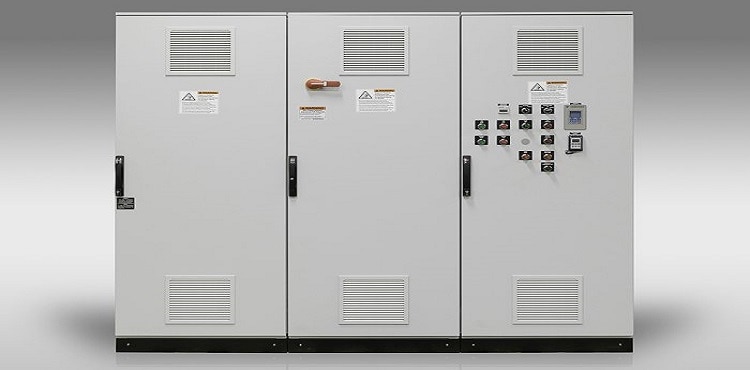 | Electrical Control Panel Manufacturer in India, Pune, Pimpri Chinchwad | Maxwell Tech Solutions Pvt. Ltd. Maxwell Tech Solutions Pvt. View product → |