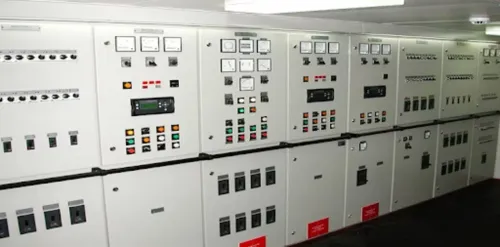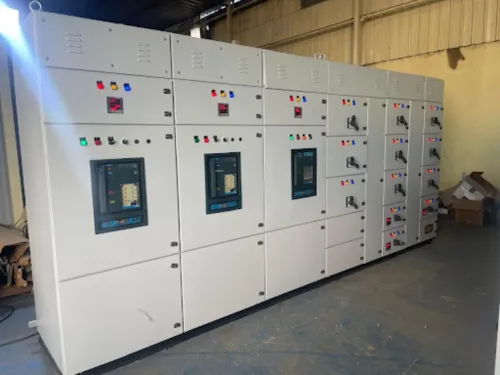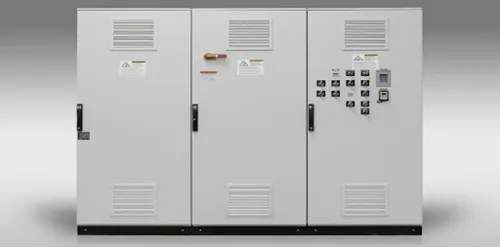
A standard PLC, MCC, PCC, APFC or VFD panel is often the right answer when the application fits a proven electrical and mechanical template. Custom engineering becomes worthwhile when site conditions, process behavior, safety functions, network architecture or installation constraints make that template unsafe, incomplete or expensive to modify. By the end, you will have a practical screening test, a documentation checklist and a way to compare a custom panel with a standard alternative.
Key takeaways
- Use a proven panel template when ratings and component quantities fully define the application.
- Choose custom engineering for unusual loads, interfaces, environments or compliance requirements.
- Select panel architecture before increasing enclosure size or adding components.
- Compare engineering, installation, commissioning and downtime costs—not enclosure price alone.
Start with a decision test: does the application exceed a proven panel template?
Use a simple test: can you specify the application completely by changing documented ratings and component quantities within a proven design? If yes, a standard PLC panel, standard MCC panel or standard PCC panel template is usually sufficient.
If the answer changes the panel’s protection logic, physical arrangement, thermal design or compliance path, you have a genuine custom control panel requirement.
Custom engineering is justified when the application includes:
- A short-circuit withstand rating, incoming voltage or selective-coordination requirement that the established design does not cover.
- Controlled restart after power loss, UPS-backed instrumentation, redundant control or defined responses to overload, safety trips and communication failure.
- Nonstandard I/O, remote I/O, legacy-equipment interfaces, unusual cable entry or severe space limits.
- Hazardous-area classification, high ambient temperature, conductive dust, moisture or a required enclosure rating that needs thermal analysis rather than a label alone.
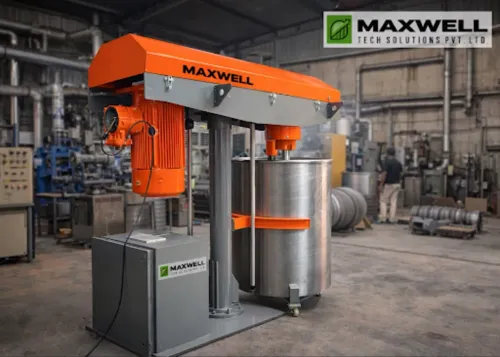
- VFD or mixing duties where acceleration torque, braking, jam detection, cable length, electromagnetic interference or drive heat cannot be checked from motor full-load current alone.
Ask whether the finished assembly also needs formal verification. UL 508A applies to industrial control panels rated up to 1,000 V, while IEC 61439 covers design and routine verification of low-voltage switchgear and controlgear assemblies.
A catalogue enclosure populated with compliant components does not automatically satisfy either assembly requirement or the installation rules enforced by the authority having jurisdiction.
Technical conditions that make custom engineering necessary
A catalogue panel needs custom engineering when the installation changes the panel’s fault duty, protection method, environment or safety function. If available fault current exceeds the panel’s short-circuit current rating (SCCR), the assembly is unsuitable until its design and protection are revised.
NEC 110.10 and UL 508A Supplement SB require a documented SCCR calculation; the lowest-rated power component and specified feeder protection can determine the result.
- Specify a custom design for unusual voltage, multiple motor ratings, high connected load, nonstandard I/O, redundant control, remote I/O or legacy equipment that uses different control voltages and communication protocols.
- Design around the site when high ambient temperature, dust, moisture, condensation, corrosive atmosphere, hazardous-area classification, restricted floor space or unusual cable entry prevents a standard enclosure from being safely installed.
- Treat emergency stops, guard switches, interlocks, safe torque off and safety relays as engineered functions when stopping performance must meet ISO 13849-1 or IEC 62061. Reset logic, diagnostics and fault behaviour cannot be added safely as an afterthought.
| Condition | Why adaptation fails | Custom engineering response |
|---|---|---|
| High fault level | Nameplate SCCR may not cover the installation | Verify the short-circuit current rating and tested protection combination |
| Heat, dust or water | NEMA 4X does not prove thermal or condensation control, and it is not automatically equivalent to an IEC 60529 IP rating | Size cooling, sealing and internal layout |
| IEC market | CE-marked components do not verify the completed assembly | Complete IEC 61439 assembly verification and routine verification |
| Safety function | Ordinary PLC logic may not provide the required performance level or SIL | Validate the safety circuit, devices and reset behaviour |
A listed industrial control panel under UL 508A, rather than loose listed components, adds a design and marking obligation. Confirm the authority having jurisdiction and plant standards before finalising the enclosure.
Choose the right panel architecture before enlarging one enclosure
Do not enlarge one enclosure until you know whether the equipment performs control, motor distribution, power distribution or power-factor correction. Separate functions when heat, fault levels, cable routes, maintenance access or network boundaries would make one cabinet difficult to operate safely.
| Option | Primary job | Choose it when |
|---|---|---|
| PLC panel architecture | Executes sequencing, interlocks, HMI and communications | The machine needs substantial I/O, safety logic or plant-network integration |
| MCC and VFD enclosure | Starts, protects and varies motor speed | Multiple motors need coordinated starters, overload protection or drives |
| PCC and APFC panel | Distributes incoming power and corrects reactive power | The installation needs busbar distribution, feeder protection or automatic capacitor switching |
| Remote I/O architecture | Places I/O near machines and links it to the controller | Long cable runs, distributed skids or high point-to-point wiring make a central panel impractical |
Use a coordinated combination when the PLC requires clean control power, the MCC carries high motor fault energy, and VFD heat would compromise sensitive electronics. Keep APFC switching away from drives when harmonics, resonance or capacitor switching could disturb them.
Choose separate enclosures when each function needs a different IP rating, ventilation method, access restriction or short-circuit withstand rating. A single custom panel is sensible only when segregation, thermal management, selective coordination and communications can be demonstrated in the same layout.
Specify managed switches, shield termination, time synchronisation, redundant control power and network segmentation before freezing the architecture. A hardwired panel can become an expensive rework project when the plant later demands diagnostics, deterministic data exchange or secure remote access.
Build a manufacturer-ready application brief
A manufacturer can design, price, test and support the panel without guessing only when your brief describes the installation, not just the required horsepower. Start with these documented inputs:
- Incoming supply voltage, frequency, phase arrangement, available fault current and required short-circuit withstand rating.
- Connected load, duty cycle, diversity assumptions, control voltage and required spare capacity.
- A motor list showing rating, full-load current, motor starting current, starting method, acceleration time and protection requirement.
- For mixers, record viscosity range, solids loading, batch recipe, vessel geometry, impeller design and stalled or jammed conditions; nameplate horsepower alone will not predict torque demand.
- The I/O list, instrument ranges, fail positions, remote signals and communication protocols, including PLC, drive, SCADA and legacy interfaces.
- Enclosure dimensions, cable-entry direction, mounting restrictions, IP rating, ambient temperature, ventilation and heat-dissipation limits.
- Hazardous-area classification, gas or dust group, temperature class, wiring method, seals and purging or pressurization requirements.
- Applicable plant standards, IEC 61439 or UL 508A expectations, drawings, labels and local authority requirements.
State every VFD cable length, grounding arrangement, reactor requirement, braking duty and electromagnetic-interference constraint. These details affect segregation, filtering, thermal calculations and enclosure size.
Specify the deliverables before fabrication: approved schematics, terminal schedules, software backups, FAT procedure, test records, spare-parts list and as-built drawings. Require routine verification for an IEC 61439 assembly; CE-marked components alone do not verify the completed panel.
Compare total installed cost, then decide whether custom manufacturing is justified
Compare a custom panel versus standard panel on total installed cost, not the purchase order alone. Add engineering lead time, site wiring, commissioning hours, software debugging, production downtime, replacement parts and future modifications.
| Option | Cost and effort to include | Decision signal |
|---|---|---|
| Custom panel | Engineering, thermal design, nonstandard hardware, FAT and as-built documentation; higher initial cost but fewer site changes | Choose it when the installation has unusual heat load, safety functions, network integration, space limits or a defined spare capacity and maintainability requirement |
| Standard or catalogue panel | Lower purchase price and shorter engineering lead time; add adapters, field wiring, software changes and redesign risk | Choose it when a proven template matches the voltage, fault level, I/O, enclosure rating, motor loads and plant standards |
Ask Maxwell Tech Solutions Pvt Ltd to price both the panel and the work outside it: cable termination, drawings, FAT, software backups, site testing and final as-built documentation. Otherwise, two quotations with different scopes will look comparable when they are not.
Custom manufacturing is the wrong choice when the requirement fits an established PLC, MCC, PCC, APFC or VFD design and no site constraint demands deviation. It is also poor value when:
- The quantity is small and the design effort exceeds the operational benefit.
- The specification keeps changing, making fabrication premature.
- Your team cannot approve drawings, attend FAT or maintain proprietary software.
- Standard replacement components are readily available, while custom parts would extend recovery time.
Related products
 | Electrical Control Panel Manufacturer in India, Pune, Pimpri Chinchwad | Maxwell Tech Solutions Pvt. Ltd. Maxwell Tech Solutions Pvt. View product → |
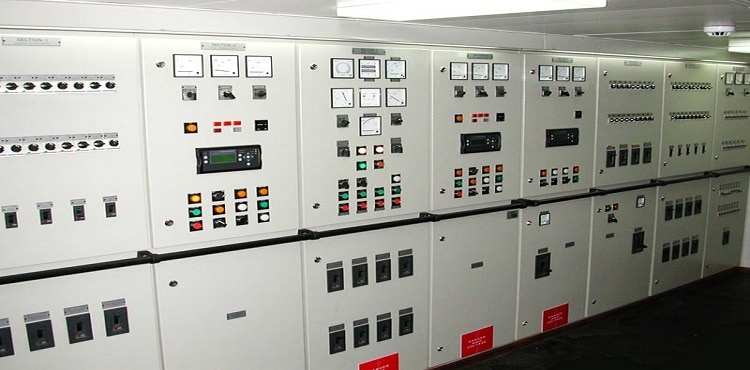 | Electrical Control Panel Manufacturer in India, Pune, Pimpri Chinchwad | Maxwell Tech Solutions Pvt. Ltd. Maxwell Tech Solutions Pvt. View product → |
Frequently asked questions
When is a standard industrial control panel sufficient?
A standard PLC, MCC or PCC panel is usually sufficient when you can define the application by changing documented ratings and component quantities within a proven design.
What technical conditions require custom control panel engineering?
Custom engineering becomes necessary when the application has unusual loads, control sequences, communication interfaces, environmental conditions, safety requirements or electrical distribution needs.
Why choose panel architecture before enlarging an enclosure?
Architecture determines segregation, heat management, maintainability, fault protection and future expansion. Enlarging one enclosure does not solve a poor layout or unsuitable panel type.
What should a manufacturer-ready application brief contain?
Provide supply details, connected loads, motor data, control philosophy, I/O list, communication protocols, enclosure conditions, drawings, standards and required documents.
How do you decide whether custom panel manufacturing is justified?
Compare total installed cost, including engineering, components, installation, testing, commissioning, maintenance and downtime, against the cost and risks of adapting a standard panel.
Related products
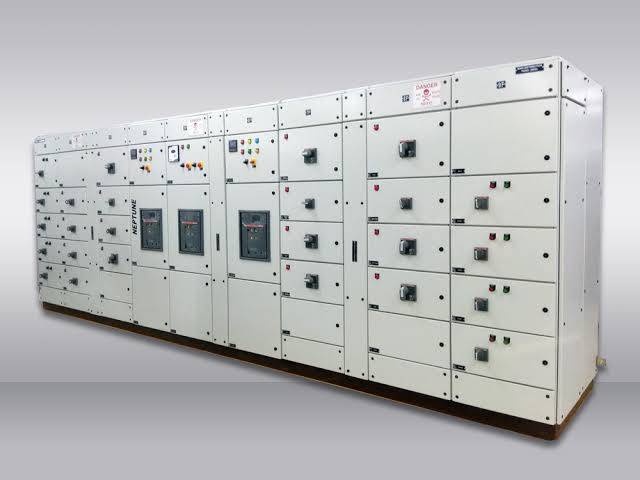 | Electrical Control Panel Manufacturer in India, Pune, Pimpri Chinchwad | Maxwell Tech Solutions Pvt. Ltd. Maxwell Tech Solutions Pvt. Ltd. View product → |
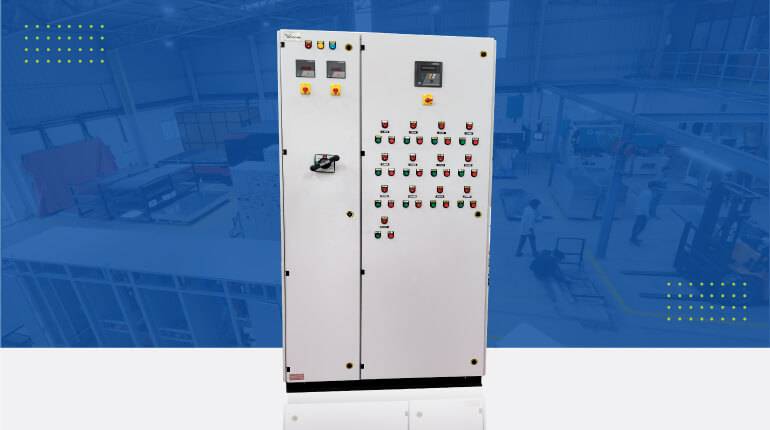 | Electric Panel Automatic Power Factor Correction Apfc Panel ₹120000 APFC Control Panel Manufacturer in Pune | Talawade Power Factor Panel Experts Looking for a trusted APFC Control Panel manufacturer in Pune and... View product → |
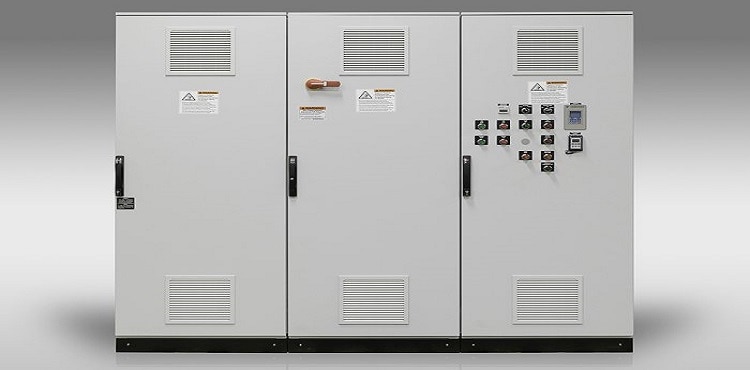 | Electrical Control Panel Manufacturer in India, Pune, Pimpri Chinchwad | Maxwell Tech Solutions Pvt. Ltd. Maxwell Tech Solutions Pvt. View product → |